Blog
Fake Celebrity Memory Supplement Ads: How to Spot Them Before You Buy
No celebrity, including Bill Gates, is connected to MemoHoney. Fake memory supplement ads often borrow a famous face, copy the look of a news site, tell a honey-drink story and add a countdown. The FTC says health claims need competent and reliable scientific evidence (FTC, Health claims) and bans fake reviews (FTC, Fake reviews rule). Check the seller and the label before you pay.
Written by the MemoHoney editorial teamUpdated · 8 min read

The question
Did a celebrity endorse or create MemoHoney?
No. No famous person developed, owns, sells or recommends MemoHoney. The label names one company, the distributor Instituto Experience in Ogden, Utah.
The question comes up because search engines pair the brand name with a famous name. Fact-check pages have covered celebrity ads for similar memory products such as MemoPryl and Memopezil. Those ads target the whole category.
This retail desk never uses a celebrity, a news logo or a famous quote. If an ad shows one next to MemoHoney, it did not come from us.
Warning signs
What do fake celebrity memory supplement ads look like?
A famous face
A TV host, billionaire or doctor appears to praise a pill. The photo or video is often edited or made with AI.
A fake news page
The page copies a real news site's logo and layout, with a "breaking" story that ends at a checkout.
A honey-recipe story
A secret honey drink or kitchen trick for forgetfulness turns, at the end, into a bottle of capsules.
Too-good promises
Words like "breakthrough", "instant" or "doctors are stunned". No memory supplement has evidence that strong.
A ticking clock
Countdowns, "only 3 left" and "today only" banners rush you past the details.
Crossed-out prices
A big "was" price makes the real one look small. Many supplement sales pages use them, MemoHoney's included, so judge only the total you pay.
The rules
What does the FTC say about memory supplement claims?
Health claims need competent and reliable scientific evidence, and testimonials cannot replace it (FTC, Health claims). In 2019 the FTC and FDA sent warning letters to sellers claiming their supplements treated Alzheimer's or dementia (FTC, Alzheimer's claims letters).
| The ad says | What the FTC expects |
|---|---|
| "Restores memory" or "fights Alzheimer's" | Disease claims need well-controlled human studies (FTC, Alzheimer's claims letters) |
| "Thousands of happy customers" | Testimonials do not replace scientific evidence (FTC, Health claims) |
| "Endorsed by a celebrity" | The endorsement must be real; fake testimonials are banned (FTC, Fake reviews rule) |
| "Helps memory, focus, heart and sleep" | Each claim needs its own evidence (FTC, Health claims) |
The FTC put it simply: "a cure-all often turns out to be a cure-nothing" (FTC, Alzheimer's claims letters). A supplement is not a cure for dementia, whoever appears in the ad.
Reviews
How can you tell if supplement reviews are fake?
Often you can't, and the FTC says not to assume you can (FTC, Online reviews). Its tips: watch for a sudden burst of reviews, check each reviewer's history, and read the low ratings.
Since 2024, an FTC rule bans fake or AI-generated reviews and testimonials, and sellers can face civil penalties (FTC, Fake reviews rule).
We publish no MemoHoney star score or customer quote until an order can be matched. The reviews page explains the empty slots.
Before you pay
How do you check a supplement seller before you buy?
Read the web address
Lookalike domains copy brand names with an extra letter or the word "official". We cannot vouch for other sites using the MemoHoney name.
Find a company and an address
A real seller names who distributes the product. MemoHoney's label prints Instituto Experience, PO Box 12730, Ogden, UT 84404.
Find the refund terms in writing
Look for the number of days, who pays return shipping and a phone number. For MemoHoney, the sales page prints a 60-day money-back window.
Check the price you will pay
The MemoHoney sales page lists 2 bottles for $158, 3 for $207 and 6 for $294. A different price elsewhere means a different seller.
More in where to buy MemoHoney safely.
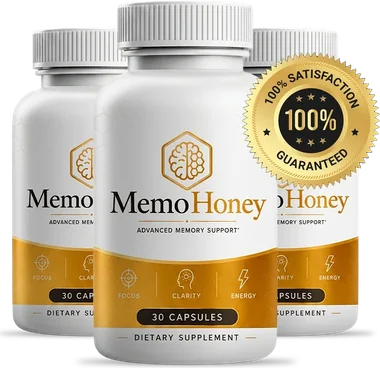
Ready to try MemoHoney?From $49 a bottle on 6 bottles · 60-day money-back window · free U.S. shipping on 3+
Order nowRead the bottle
How do you check a memory supplement label?
Read the Supplement Facts panel before the ad. It shows what you actually get, whatever the story was.
- Every ingredient has its own amount, with no hidden blend.
- Amounts are close to the doses used in research.
- A distributor or maker is named.
- A caution says who should ask a doctor first.
- The FDA statement says it does not treat or prevent disease.
MemoHoney passes most of these checks. Its weak spot is the second: its amino acids sit far below studied doses. The label-first checklist goes further.
Take action
Where can you report a fake supplement ad?
Report it to the FTC at ReportFraud.ftc.gov. Reports help the agency spot patterns and bring cases.
A useful report includes a screenshot of the ad, the web address it led to, the date you saw it and where it appeared. If you paid, add the amount, the charge name on your statement and any order emails.
Use the "report ad" button on the social site or search engine that showed it. If you paid, call your card issuer. If an ad misuses the MemoHoney name, email [email protected] with a screenshot and the web address.
For orders placed through this site, call +1 (302) 200-3480 with your order ID.
Bottom line
What is the safest way to judge a memory supplement ad?
Ignore the face and the story. Check the seller, the label and the refund terms, then decide.
If memory changes worry you, see a provider first. Supplements are no reason to postpone that visit (NCCIH, Supplements for cognition).
Sources
- 7 Things To Know About Dietary Supplements for Cognitive Function, Dementia, and Alzheimer's Disease. National Center for Complementary and Integrative Health, 2026.Direct evidence that supplements prevent Alzheimer's or other dementias is lacking; don't use them as a reason to postpone seeing a provider about memory loss; treatable conditions such as depression, medicine reactions, thyroid, liver or kidney problems can impair memory.
- FTC-FDA warning letters target treatment claims for Alzheimer's, dementia, and other serious diseases. Federal Trade Commission, 2019.FTC and FDA warned supplement sellers about Alzheimer's and dementia treatment claims; such claims need well-controlled human studies; a cure-all often turns out to be a cure-nothing.
- Health Products Compliance Guidance. Federal Trade Commission, 2022.Health claims need competent and reliable scientific evidence; testimonials cannot replace it.
- How To Evaluate Online Reviews. Federal Trade Commission, 2024.Watch for bursts of reviews, check reviewer history, and don't assume you can spot fakes.
- Federal Trade Commission Announces Final Rule Banning Fake Reviews and Testimonials. Federal Trade Commission, 2024.The rule bans fake or AI-generated reviews and testimonials and allows civil penalties.
FAQ
Fake celebrity supplement ads: common questions
Which famous people show up in fake memory supplement ads?
Business leaders, TV doctors, news anchors and actors are common picks, because their faces build trust fast. Fact-check pages have tied such ads to products like MemoPryl and Memopezil. None of these people is connected to MemoHoney, and the retail desk never uses a famous face.
How do I know if a supplement ad is fake?
Look for a famous face, a page dressed as news, a secret-recipe story, disease promises and a countdown. Two or more together is a strong warning. Then check the seller's name, address and written refund terms before entering any card details.
What should I do if I ordered from a fake ad?
Call your card issuer right away and ask about a dispute. Save the ad, the web address, the receipt and any emails. Then report the ad to the FTC at ReportFraud.ftc.gov. Do not take a product whose label you cannot read or match.
Are countdown timers on supplement websites real?
Not always. Some timers restart when you reload the page, and the price stays the same. A real offer gives you time to read the label and the refund terms. If a clock is the main reason to buy now, step away and check first.
Are AI-generated supplement reviews legal?
No, not when they pose as real customers. The FTC rule announced in 2024 bans fake and AI-generated reviews and testimonials and allows civil penalties (FTC, Fake reviews rule). A video of a smiling buyer proves nothing unless the seller can show a real, matched order.
Why are there so many MemoHoney websites?
Several domains use the MemoHoney name, and some appear in review and complaint pages online. We cannot vouch for them or what they ship. Order buttons on this site open the MemoHoney sales page; for order questions, call +1 (302) 200-3480.
Who wrote this
Written and reviewed by
Plain-language pages built from the label, the sales page and linked public health sources.
Last updated . Read our editorial standards and how we check reviews. This website is run by a U.S. retail desk that sells MemoHoney, not by the maker (the label says distributed by Instituto Experience, Ogden, UT). We earn money when you buy through our order links.
Keep reading
More about MemoHoney
Where to buy
How the order buttons here reach the sales page, why we cannot vouch for other MemoHoney domains, and how to check a bottle.
Read moreReviews
Why MemoHoney shows no star score yet, how a review gets checked, and where order complaints should go.
Read more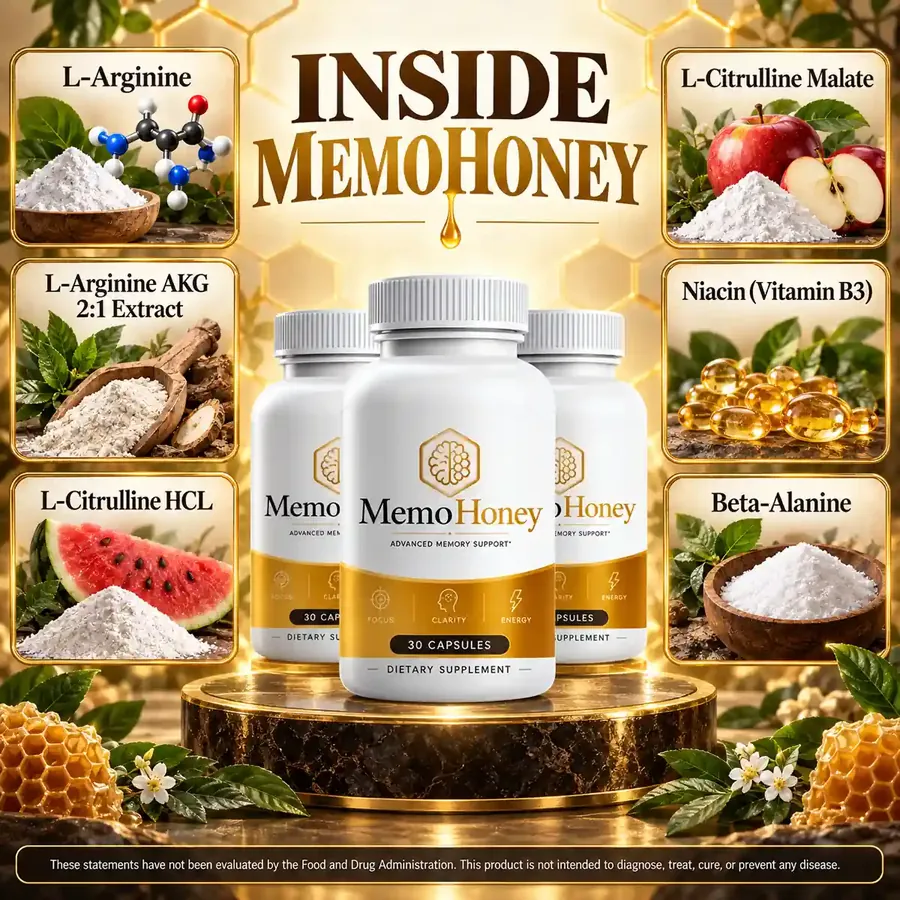
Choosing a memory supplement
An eight-step label checklist for any memory supplement, the ad red flags to skip, and how MemoHoney scores.
Read moreLicensed U.S. retail desk for MemoHoney
Ready to try MemoHoney?
Three packs on the sales page: 2, 3 or 6 bottles. The 6-bottle pack costs the least per bottle and ships free in the U.S.
- Secure checkout
- 60-day window
- Ships from the U.S. with tracking