Ingredient profile
Beta-Alanine in MemoHoney: Benefits, Brain Claims and the 40 mg Dose
Beta-alanine is an amino acid that muscles use to build carnosine. It has been studied at 1.6 to 6.4 g a day for high-intensity exercise, with mixed results (NIH ODS, Exercise supplements). One MemoHoney capsule has 40 mg, one-fortieth of the lowest studied dose and far below the 800 mg linked to tingling. The label does not explain why it is in a memory product.
Written by the MemoHoney editorial teamUpdated
The basics
What is beta-alanine?
Beta-alanine is an amino acid your body makes on its own and also gets from meat and fish. It is the last line on the MemoHoney label, at 40 mg.
Unlike most amino acids, beta-alanine is not used to build proteins. Its main known job is to team up with another amino acid, histidine, to form carnosine inside muscle cells. Sports supplements sell it for that reason.
| Label name | Beta Alanine |
|---|---|
| Scientific name | Amino acid |
| What it is | Amino acid |
| Position in the list | 7 of 7 (every amount is printed per capsule) |
| Per capsule | 40 mg |
| Amount used in research | 1.6-6.4 g a day for up to 8 weeks in exercise studies |
| Strength of evidence | No memory evidence |
| Traditional or marketed use | Amino acid sold for high-intensity exercise |
| Main caution | Tingling skin starts around 800 mg in one dose; 40 mg is far below that. |
How it works in muscle
Why is beta-alanine known for workouts?
Because carnosine helps muscles cope with the acid that builds up during short, hard bursts of effort.
During a sprint or a heavy set, muscles produce acid faster than they can clear it. That burning feeling is part of what makes you slow down. Carnosine acts like a buffer and soaks up some of that acid.
The body has only a little beta-alanine on hand, so it limits how much carnosine muscles can make. Taking grams of it every day for weeks raises carnosine levels. That is the idea behind beta-alanine powders for athletes.
The NIH Office of Dietary Supplements reviewed the human studies. Doses of 1.6 to 6.4 g a day were used, and the results for high-intensity exercise were mixed (NIH ODS, Exercise supplements). In other words, some trials saw a small edge and others saw none.
By the numbers
Beta-alanine in MemoHoney at a glance
Dose check
How does 40 mg of beta-alanine compare with studied doses?
It is a small fraction. Exercise studies used 1,600 to 6,400 mg a day, often split into several doses (NIH ODS, Exercise supplements).
| Amount | Milligrams | What it means |
|---|---|---|
| One MemoHoney capsule | 40 mg | The full daily serving on the label |
| Low end of studied doses | 1,600 mg a day | 40 times the capsule amount |
| High end of studied doses | 6,400 mg a day | 160 times the capsule amount |
| Single dose linked to tingling | 800 mg or more | 20 times the capsule amount |
To reach even the lowest studied amount, you would need 40 capsules a day. The label says one, and warns not to exceed the dose. So the exercise research cannot be borrowed to describe what one capsule does.
The same gap applies to the other amino acids in the formula. See how L-arginine and L-citrulline compare.
Beta-alanine and the brain
Does beta-alanine help memory or the brain?
There is no good evidence that it does at 40 mg. The ODS fact sheet discusses exercise only and says nothing about memory (NIH ODS, Exercise supplements).
People search for "beta alanine benefits for brain" a lot. Most research linking amino acids like this one to memory is early or done in animals. None of it tested a 40 mg daily amount, and none tested the MemoHoney formula.
The MemoHoney label calls the product "Advanced Memory Support*" but does not say what beta-alanine adds. The sales page does not explain it either. A buyer is left to guess, and we would rather say that plainly than invent a reason.
Treat the 40 mg of beta-alanine as a minor ingredient with an exercise background. It is not a known memory aid. For the full formula idea, read how MemoHoney is meant to work.

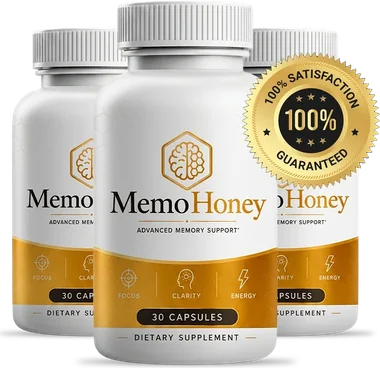
Ready to try MemoHoney?From $49 a bottle on 6 bottles · 60-day money-back window · free U.S. shipping on 3+
Order nowSide effects
Beta-alanine side effects: tingling and itchy skin
The best-known side effect is tingling skin, called paresthesia. It shows up at single doses of 800 mg or more (NIH ODS, Exercise supplements).
Face, neck and hands
The tingling is felt on the face, neck, backs of the hands and upper body.
60 to 90 minutes
It fades on its own within 60 to 90 minutes. ODS describes it as not harmful.
Very unlikely
One capsule is one-twentieth of the dose tied to tingling. Itchy skin has also been reported at study doses.
If you feel tingling after a capsule, check your other products. Pre-workout powders often contain grams of beta-alanine.
Long-term use
Is beta-alanine safe to take every day?
At study doses it appears safe for up to 8 weeks (NIH ODS, Exercise supplements). Longer daily use has not been well studied.
The 8-week record comes from people taking grams a day. MemoHoney gives far less, but the label suggests daily use with no end date. Nobody has tracked beta-alanine at 40 mg a day for months, so the honest answer is "probably fine, not proven".
- Study doses: 1.6 to 6.4 g a day
- Safety shown: up to 8 weeks
- Known side effects: tingling, itchy skin
- Long-term daily use: not well studied
Beta-alanine is the mildest ingredient here. L-arginine in the same capsule can lower blood pressure and interacts with heart medicines. Read the side effects page before you start.
Our take
Beta-alanine in MemoHoney: worth it or filler?
Harmless at this amount, and the amount is printed. But nothing links 40 mg of beta-alanine to memory.
In its favor
- Exact amount on the label
- Far below the tingling dose
- Mild side-effect profile in studies
Against
- One-fortieth of the lowest studied dose
- Studied for exercise, not memory
- The label gives no reason for it
FAQ
Beta-alanine in MemoHoney: questions people ask
What does beta-alanine do?
Beta-alanine helps muscles make carnosine, which buffers acid during short, intense effort. Supplements of 1.6 to 6.4 g a day have been studied for high-intensity exercise, with mixed results (NIH ODS, Exercise supplements). That is its main known use.
What are the benefits of beta-alanine for the brain?
No brain benefit has been shown at the amount in MemoHoney. The NIH exercise fact sheet covers only performance (NIH ODS, Exercise supplements), and research on these amino acids and memory is mostly early or in animals. MemoHoney has 40 mg per capsule.
Is beta-alanine tingling dangerous?
No. The tingling, or paresthesia, is described as harmless and lasts 60 to 90 minutes (NIH ODS, Exercise supplements). It is linked to single doses of 800 mg or more. One MemoHoney capsule has 40 mg, so tingling from it alone is very unlikely.
How much beta-alanine is in MemoHoney?
Each capsule has 40 mg of beta-alanine, printed on the Supplement Facts panel. That is the last of seven label lines and one-fortieth of the lowest daily dose studied for exercise (NIH ODS, Exercise supplements).
Why is beta-alanine in a memory supplement?
The label does not say. Beta-alanine is best known as a workout ingredient. The MemoHoney label and sales page give no reason for including 40 mg in a product labeled for memory support, and we do not guess.
Can you take beta-alanine every day?
Studies at gram doses found it appears safe for up to 8 weeks (NIH ODS, Exercise supplements). Longer daily use is not well studied. MemoHoney gives a much smaller amount, but if you use it for months, mention it at your next checkup.
Is beta-alanine a stimulant like caffeine?
No. Beta-alanine is an amino acid, not a stimulant, and the MemoHoney label lists no caffeine. The tingling some people feel after large doses is a skin sensation, not a burst of energy (NIH ODS, Exercise supplements). At 40 mg, most people will notice nothing.
Who wrote this
Written and reviewed by
Plain-language pages built from the label, the sales page and linked public health sources.
Last updated . Read our editorial standards and how we check reviews. This website is run by a U.S. retail desk that sells MemoHoney, not by the maker (the label says distributed by Instituto Experience, Ogden, UT). We earn money when you buy through our order links.
Keep reading
More about MemoHoney
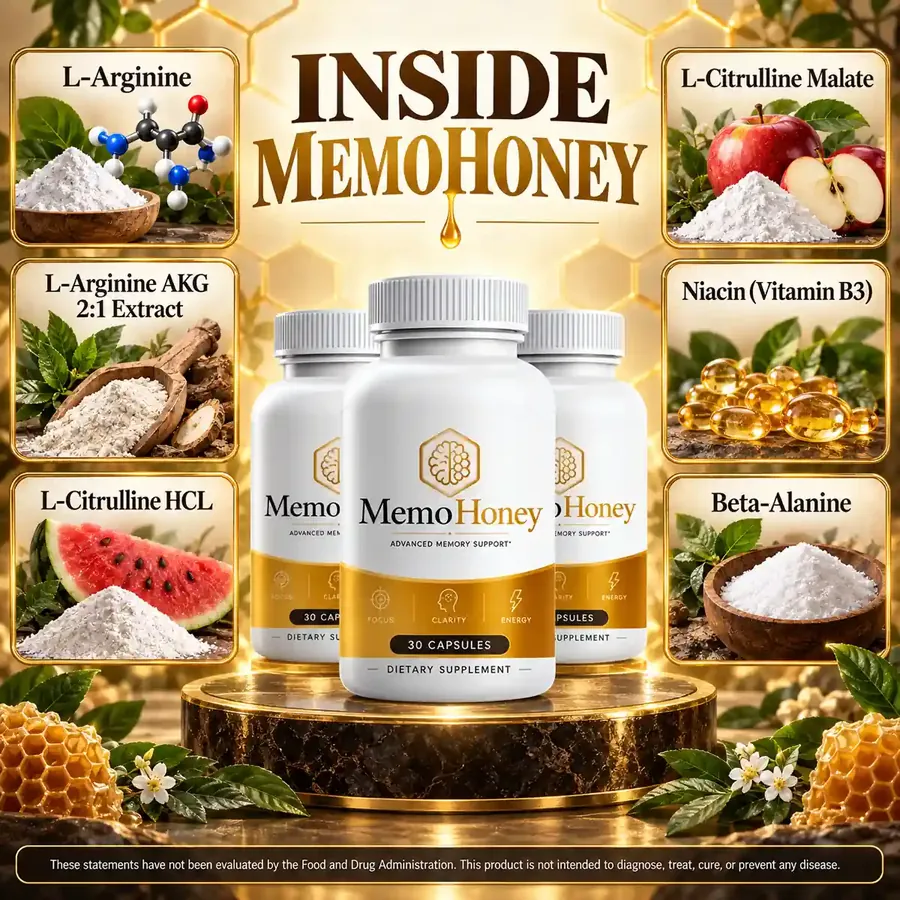
Ingredients
All seven MemoHoney label lines with their amounts, what each is studied for, and how the doses compare with research.
Read more
How it works
The nitric oxide idea behind MemoHoney, what NIH research found about it, and the questions no study has answered yet.
Read more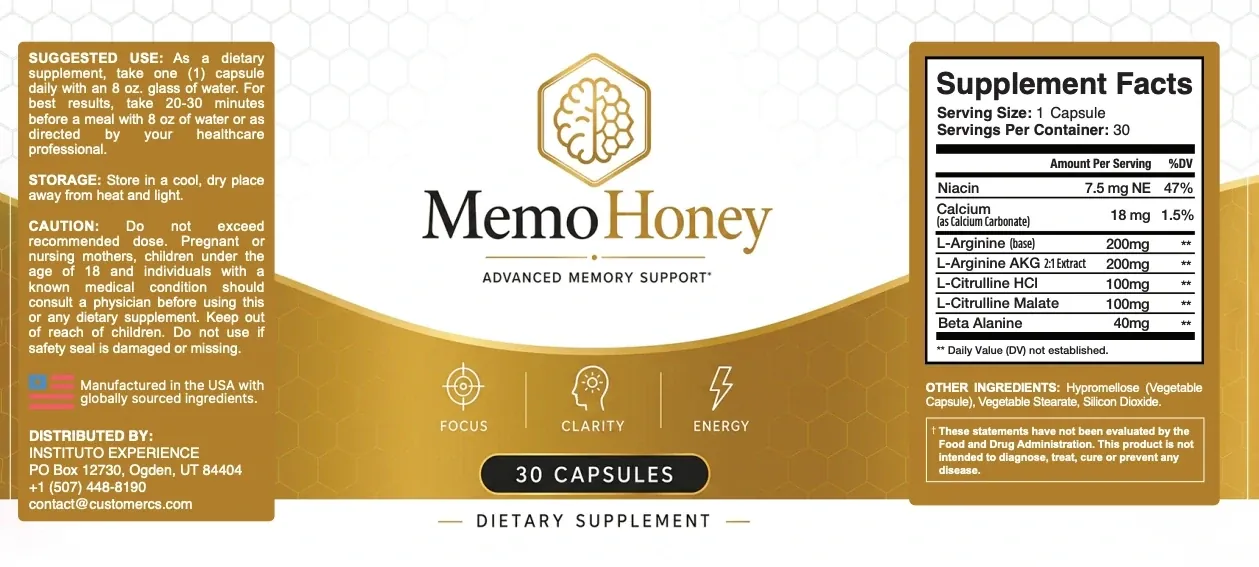
Side effects
Side effects for each MemoHoney ingredient, the drug interactions table, and the signs that mean stop and call a doctor.
Read moreLicensed U.S. retail desk for MemoHoney
Ready to try MemoHoney?
Three packs on the sales page: 2, 3 or 6 bottles. The 6-bottle pack costs the least per bottle and ships free in the U.S.
- Secure checkout
- 60-day window
- Ships from the U.S. with tracking